Objective:
- To explore ideas or concepts within and related to the module as openly as possible
- The learner will be able to connect complex ideas from previous weeks to facilitate holistic learning
- To give the learner an opportunity to construct own meaning from weekly reading and previous jams, as well as gain a deeper understanding into how other learners construct meaning
- To evidence the power of interdisciplinary group work and building on each other’s ideas in a design process and through design dialogue
- The learner will benefit and learn from the diverse and/or interdisciplinary learner cohort
- To develop reflective skills required for effective design thinking practice, design thinking activity facilitation, and module portfolio assessment
- The learner builds their confidence sharing ideas, as well as hone their storytelling skills
Overview:
Reflective Jam is an opening activity (developed within a design thinking module but can be used in any enterprise education context) and is a chance for learners to share their ideas, inspirations, challenges, and feedback from previous weeks. Learners are also invited to use and practice elements of storytelling by sharing their personal observations, cultural backgrounds, as well as their learning experience outside of the module to construct and share meanings and reflections along their learning journey. The focus is on giving learners the opportunity to reflect, build on each other’s diverse backgrounds, practice design dialogue and storytelling, which are core skills for successful design thinking practitioners. An equally important part of a Reflective Jam is to give control of the session to the learners and allow them to direct their learning and feel empowered to create knowledge, not just consume it.
Activity:
Options for delivery:
This activity can be conducted in medium sized groups (around 30 students) and can be adapted to face to face and online delivery. It requires a facilitator and in face to face environment works well with an object that serves as a ‘talking stick’ that learners pass on from one another. In the context of the module where this activity originated, a plush platypus toy was used. Duckbilled platypus was used as a module mascot and as the perfect analogy for the interdisciplinary nature of the module and design thinking teams that the module also helped learners to be comfortable and effective in. Students also proposed and voted on the names of the mascot (eventually arriving at Agent P, see image 1). As learners pass the platypus around, they share a reflection, an inspiration or an idea. Facilitators help to connect ideas and concepts between students, the curriculum, their industry experiences or stories.
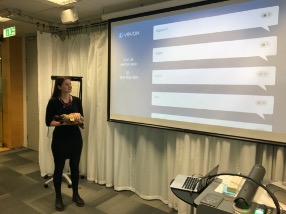
Image 1. Students proposing and voting on names for the platypus Reflective Jam ‘talking stick’
In an online environment there is more of a need for facilitator to help manage turn taking. Using tools such as Miro or Mural, Padlet can help to facilitate the session and even out participation. Students are invited to add an idea, or a reflection and facilitator can then go through contributions and invite individual students to elaborate. Another way to do this, is to share a talking point at the start of the session. For example, the Nike Go FlyEase release was a major event for anyone interested in design. Showing students a short clip of designers reflecting on the design process of the shoes (Nike, 2021) helped to generate meaningful discussion. Similarly, IDEO Shopping Cart clip (Neri, 2009) helps students to go behind the scenes and spot valuable insights about design. Alternatives can also include articles, podcasts, or any other resources linked to the module and learning objectives. Another option is to use responseware such as Vevox to gather student input, questions and ideas they would like to see discussed ahead of the session. In this context, Reflective Jams become more of a case-based learning activity, but students still remain in control of the content and pace of the Jam and the module.
Timings:
20-30 minutes is needed to allow students to warm up and switch their mode of thinking, especially if they arrived from another more structured session or lecture. If intended to be used consistently throughout the module, initial sessions can be longer to allow more students to contribute and to generate trust among learners. As the dynamics settle, some students will be more vocal and willing to contribute each week. It is important to ensure there are equal opportunities to contribute. Using students’ disciplinary background can be helpful here (e.g. what does a Physics/Physicist have to say on this topic?)
Further context:
Inspired by the AJ&Smart’s Lightning Decision Jam (LDJ), this activity gives the power to the learners and the teacher deliberately releases control during these sessions, making it clear that it is student time. Students are positioned as the experts, representing their discipline, interests, or cultural backgrounds, which empowers them to create knowledge, developing their confidence when working on assessment and using the skills upon graduation.
Design thinking practitioners and facilitators need to have an ability to listen, curate and synthesise ideas, contribute to other people’s ideas, as well as have an appreciation for diversity within an activity, and ability to continuously reflect and use storytelling. There are a lot of complex skills involved in this and in many cases, this requires students to unlearn some of the behaviours they are expected to demonstrate in a traditional academic setting.
Successful designers and entrepreneurs allow themselves time for carefully nurtured reflective practice to help them devlop and refine a personal repertoire of ideas, tools and techniques. This requires openness as well as movement between divergent and convergent thinking spaces (Spencer, 2019). Very often this openness and creative potential dies early on with a fixation on an initial single idea. Reflective Jams, thanks to their seemingly light touch nature, allow to create an immersion in key module concepts. By creating a continuous design dialogue between the learners and between the learners and the facilitator, learners are able to develop and practice core capabilities without even realising they are learning an entire range of skills (reflective thinking, storytelling, active listening, working with diversity, etc). Storytelling in particular is a core skill (often missing from many degree programmes), both for building a narrative of self-growth, working in effective teams, and developing ideas. Within the module where this activity originates in, Ellen Lupton’s book Design is Storytelling (2017) is used to help students see strong examples of storytelling in design. Reflective Jams are then used to help learners develop their own style and tone of voice.
Skill Development:
Reflective thinking
Storytelling
Ability to connect ideas
Lateral and creative thinking
Active listening and empathy
Teamwork (particularly interdisciplinary teams)
Ability to give and receive feedback
Resources:
All resources for this activity are optional, as it can be adapted for the delivery mode, room set up and the length of the session.
- An object to serve as a ‘talking stick’
- Whiteboard and pens
- Post its
- Miro, Mural, Padlet or another piece of learning technology that can help capture insights and reflections
References:
Spencer, J. (2019). Convergent Thinking Versus Divergent Thinking. https://www.youtube.com/watch?v=cmBf1fBRXms, accessed 13th June
Neri, A. (2009). IDEO Shopping Cart. https://www.youtube.com/watch?v=M66ZU2PCIcM&t=12s, accessed 13th June
Lupton, E. (2017). Design is Storytelling. Cooper Hewitt, Smithsonian Design Museum: New York.
Lightening Decision Jam [LDJ] https://ajsmart.com/ldj, accessed 13th June
Nike (2021). Nike Go FlyEase. Behind the Design. https://www.youtube.com/watch?v=ZTRsiWa79rY, accessed 13thJune